We are continuing with all things Book Week and following on from yesterday’s post about choosing a good book

We thought that it would be fun to share some of our favourite books with you…

Gruff’s Top 5 Classic Reads:

top5-classics

Gruff’s Top 5 Current Reads:

top5-current

Gruff’s Top 5 Aussie Reads:

top5-aussie

Gruff would love to know some of your favourite books so add your comments below or send Gruff an email.


22 August, 2018
Good-Books

Pick up a Book Today!

We are continuing with all things Book Week and following on from yesterday's post about choosing a good book.  We thought that it would be fun to share some of our favourite books with you... Gruff's Top 5 Classic Reads: Gruff's To

Read more

“You can find magic wherever you look. Sit back and relax, all you need is a book”

Dr Seuss

Gruff has been reading his way through the pile of books he borrowed from the library and as it is Book Week, we thought it would be useful to share some tips on how you can help choose a good book for your child to read.

  • Resist making your child read the books you loved as a child. Take them to a bookstore or library and allow them to choose a book that interests them. They are more likely to read a book they have chosen themselves than one being pushed on them.
  • Look at the current and past Children’s Book of The Year nominees and winners.
  • Encourage a mix of fiction and non-fiction and a range of styles and genres. Novels are not ‘better’ than comics, they are just different.
  • Be honest with your child: explain to them that some books need to be read at a later stage. When a book is too difficult to read, the reader will often miss or skip over important parts of the story. But you could read these books together, as reading to your child is just as important as them reading to themselves.
  • Consider your child’s reading ability and choose books that are at their ‘reading level’. Try the ‘5 finger rule’.

Five-Fingers-Poster

Choosing a good book is not an exact science, however, all good books should be authentic, credible, captivating and exciting.

Happy reading…and feel free to share with us which books you are enjoying at the moment, or send us a photo of you reading your favourite book!

21 August, 2018
Girl-Choose-Book

Calling all BOOK LOVERS…How do we choose ‘good’ books?

“You can find magic wherever you look. Sit back and relax, all you need is a book” Dr Seuss Gruff has been reading his way through the pile of books he borrowed from the library and as it is Book Week, we thought it would be useful to

Read more

“There is more treasure in books than in all the pirates’ loot on Treasure Island.”

-Walt Disney-

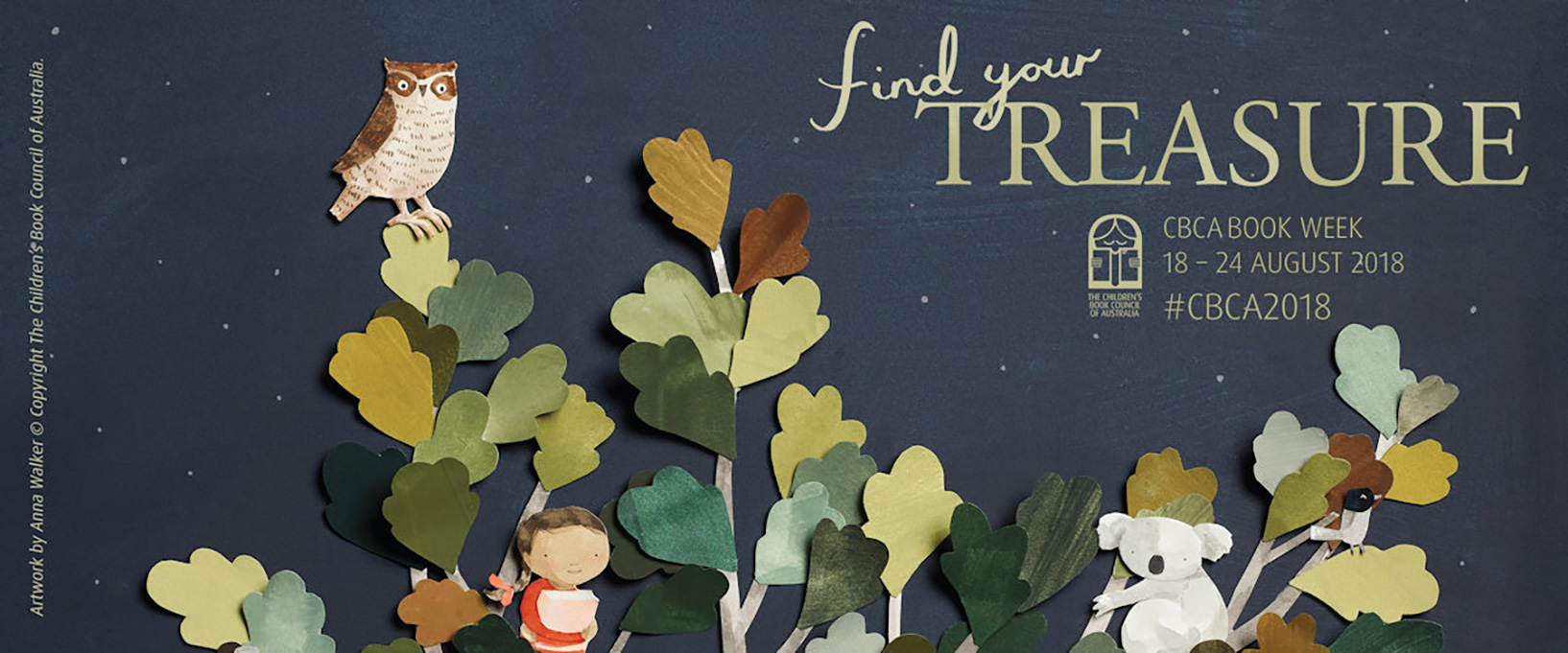
Each year all across Australia, the Children’s Book Council of Australia (CBCA) bring children and books together by celebrating Book Week. This year book week falls on the 18th-24th August with the theme being “Find Your Treasure”. This is a time to honour Australian children’s literature.

Pirate-Books

Gruff especially enjoyed reading one of the 2017 winners: Go Home, Cheeky Animals! By Johanna Bell and Dion Beasley and he is very excited to see who the winners will be this year. Have you read any of the books on the shortlist? Here is a link to all of them, https://www.cbca.org.au/short-list-2018 .

Go Home Cheeky Animals

Why is reading so important?

Reading out loud with your child is a wonderfully enriching experience and an opportunity to spend quality time together. Research has found that shared reading with an adult is highly beneficial for children, whether they can read by themselves or not.  Some of these benefits include:

  • Introduces your child to more diverse topics and language.
  • Helps your child develop their listening, spelling and reading comprehension.
  • Fosters a positive attitude towards reading so your child can become a ‘lifelong reader’.
  • Encourages your child to become curious about the world around them by introducing them to a variety of different topics, both fiction and non-fiction.
  • Improves your child’s concentration.
  • Your child sees you as a reader and a learner, and you are able to model good reading strategies and habits.

For children who speak more than one language, reading plays an important role in maintaining a connection with their culture and community. Developing reading fluency in one language has cross-over benefits in learning to read in another language. Being literate in more than one language is not only COOL, there are suggestions that it benefits cognitive development. Reading with your child in their mother language as well as in English are equally important.

Gruff is heading to the library now to borrow all his favourite books to read during Book Week. Send him a message to share what your favourite books are, write a book report for him or send a photo of your favourite place to read…

Library Gruff

16 August, 2018
2018-Book-Week-Treasure-wide

Calling all BOOK LOVERS…Book Week is coming!

“There is more treasure in books than in all the pirates’ loot on Treasure Island.” -Walt Disney- Each year all across Australia, the Children’s Book Council of Australia (CBCA) bring children and books together by celebrating Bo

Read more

The 11th of August 2018 marked the beginning of Science Week. This nation wide event, which runs until the 19th of August, aims to increase public knowledge, understanding and appreciation of science, technology, engineering, and innovation. It also hopes to raise the awareness of the role of these disciplines in maintaining and improving our communities, society, economy and the environment.

The theme this year is “Game Changers and Change Makers” and events are been held all over the country. You can find events near you here, https://www.scienceweek.net.au/

Game-Changers

Inspiration for this year’s theme came from the following:

  • 200th anniversary of the publication of Mary Shelley’s Frankenstein.
  • 40th anniversary of the birth of the first IVF baby.
  • International Year of the Reef.

Gruff loves science and technology, especially doing experiments. I think he has one to share with you!

If you want to share your favourite experiments with us we would love to hear from you…

Science Gruff

13 August, 2018
Science-Week-Logo

Science Week – Let loose your inner Einstein!

The 11th of August 2018 marked the beginning of Science Week. This nation wide event, which runs until the 19th of August, aims to increase public knowledge, understanding and appreciation of science, technology, engineering, and innovation

Read more

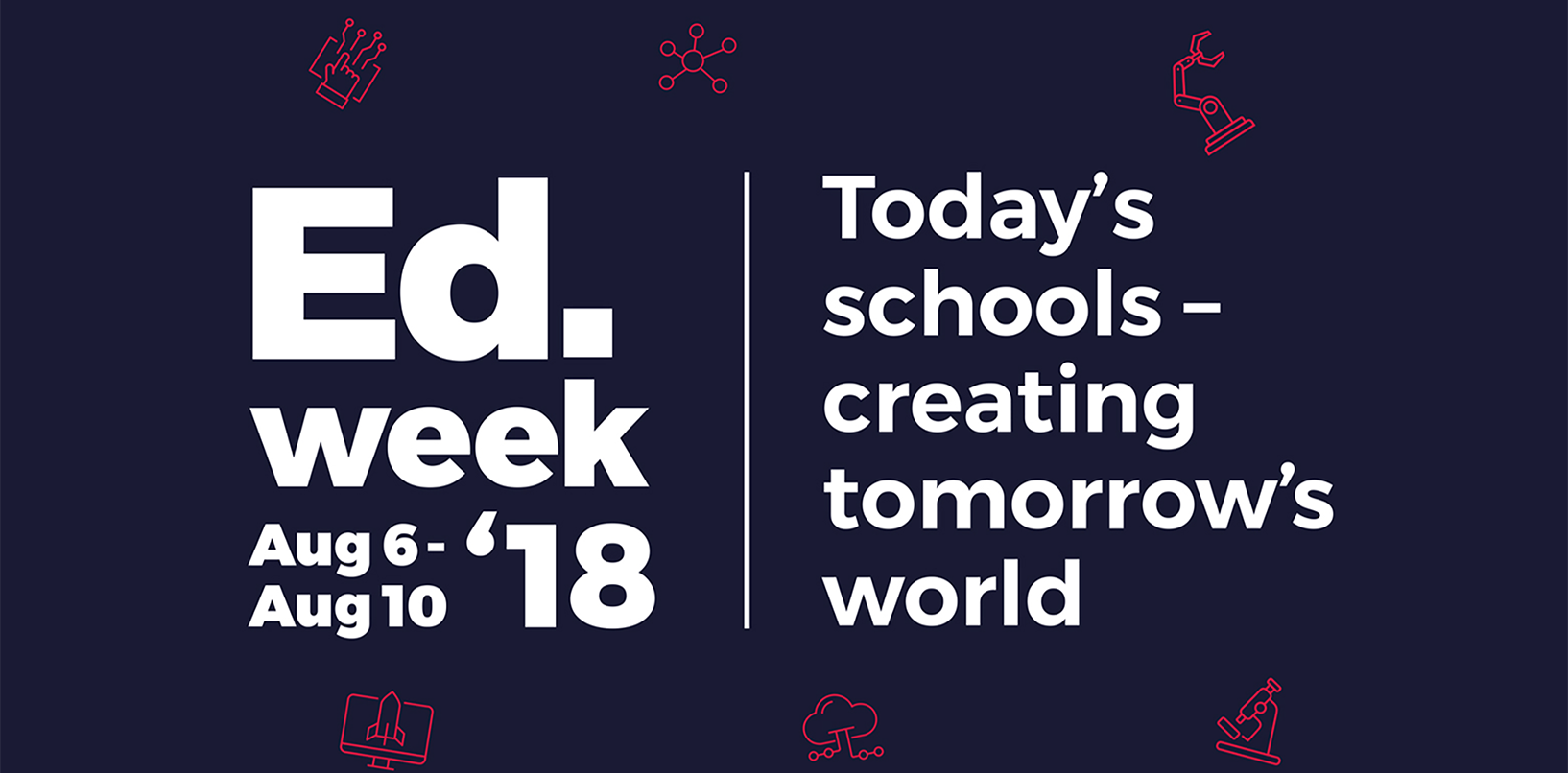
Across New South Wales from 6-10th of August public schools enjoyed Education Week. So, what was it all about?

Education Week is a statewide, annual event held to celebrate public school education. It is an opportunity to showcase outstanding teaching and learning practices, as well as the achievements of schools and pupils around NSW. It aims to highlight the value of public school education and how it benefits communities on multiple levels.

This year’s theme was “Today’s Schools – creating tomorrow’s world.” It describes how public schools in NSW are equipping their students with the necessary skills and abilities to achieve success in a rapidly changing global society.

Schools organised a range of cross-curricular activities to illustrate this theme, and they could take part in the GAME CHANGER CHALLENGE.

Gamer-Challenge

Reasons to focus on Primary Education?

We all know that education is a vital aspect of life and ongoing human development, but why is primary education so important?

Primary education is the foundation on which all future education is built, it ignites children’s innate curiosity and develops a love of learning. It focuses on the cognitive and intellectual aspects as well as the social, physical and emotional development of each child. It builds confidence and self-awareness. Primary education is a powerful tool in helping children develop cross-cultural understanding and interpersonal skills, and it helps foster decision making and critical thinking, which are essential skills in an ever changing world.

Just think…a child who entered school the year will finish high school in 2030! What will their world be like? How will we help them be ready for it?

10 August, 2018
Ed-Week-Banner

Education Week – What’s it all about?

Across New South Wales from 6-10th of August public schools enjoyed Education Week. So, what was it all about? Education Week is a statewide, annual event held to celebrate public school education. It is an opportunity to showcase outsta

Read more

It’s widely accepted that extra-curricular activities help children to learn and develop outside the classroom. But what are the actual benefits of extra-curricular activities, especially for children in years 2 & 3?

Social Development

Children at this age are quickly developing their social and emotional skills. They begin to learn self control and start to understand the world around them.

Allowing your child to engage in team activities such as soccer or drama class will develop their ability to work with others. Social activities will teach them to empathise with other children and begin to develop skills in managing friendships and collaborative tasks.. Your child will also learn to compromise and take accountability for their actions. our child will build on their relationships and make new friends.

Gross Motor Skills

Although most of your child’s fine motor skills have already developed by this age, their gross motor skills are still being fine-tuned. Dance, martial arts or sports like soccer, netball or gymnastics will help develop these. Things like running to kick a ball, jumping over a skipping rope or balancing on a beam will do wonders for your child’s gross motor skills whilst also keeping them healthy, active and entertained.

Developing New Skills

Trying new things will give your child a sense of accomplishment. Pursuing particular interests like playing an instrument, learning a new language or mastering a dance routine will give your child confidence and help build their self-esteem. Children at this age are very impressionable and begin to develop a sense of self-consciousness so it’s crucial that they find an outlet that will make them feel happy and accomplished.

Developing these skills will also teach your child about self-discipline, accountability and motivation. Practising and developing their skills in their own time will teach them about setting and attaining goals as well as time management, which will come in handy later in school as well as adult life.

Assists Academic Learning

Studies all over the world have suggested that children who engage in extra-curricular activities are likely to perform better academically than those who do not.

A study in the UK found that children engaged in organised sports at ages 5, 7 and 11 were almost one and a half times more likely to reach a higher than expected level in their national standardised maths tests at age 11. It also discovered that children who participated in organised sports and physical activities had better behavioural, social and emotional skills than children who did not.

Extra-curricular activities instil confidence in children, develop their skills and teach time management. Amongst many other things, these skills will help your child with doing their homework and assist them when completing classwork or studying for exams later in their academic journey.

31 July, 2018
Kids on exercise balls

How beneficial are extra-curricular activities for my 8 year old?

It’s widely accepted that extra-curricular activities help children to learn and develop outside the classroom. But what are the actual benefits of extra-curricular activities, especially for children in years 2 & 3? Social Develop

Read more

It’s easy to know what your children are learning at school. Anyone can look up the curriculum, google NAPLAN or ask the teacher. But aside from classroom learning, what skills are children ages 7-9 developing and how can parents help?

Child development is measured in categories commonly known as Cognitive, Social & Emotional, Speech & Language, Fine Motor Skills and Gross Motor Skills.

From helping them figure out different shapes to watching them walk for the first time, you’ve been closely monitoring your child since they were born. But development milestones are not just for the early days. It’s important to understand how your child is developing even when they can walk, talk and feed themselves.

What developments should you be looking out for by ages 7-9?

Cognitive Development

At this age, your child’s ability to learn, absorb information and solve problems is developing. Their attention span is increasing and they can focus on tasks for 30-45 minutes.

They’ll begin to show interest in specific topics and start to plan ahead. They’ll start understanding more complex math problems and think about the reason behind things.

Social and Emotional Development

Your child is beginning to gain an understanding of the world around them. They’ll be asking questions and developing their own morals and values.

They learn self-control and become aware of their own behaviour as they form new friendships. They can now play games with rules and learn to play fair.

Children at this age are curious, impressionable and are developing a sense of self-consciousness. They become increasingly independent but still seek approval from the adults in their lives.

Speech and Language Development

By this age they’ve developed basic speech and language skills and are now expanding their vocabulary, learning several new words per day.

You should now understand most of your child’s sentences and conversations. No more nodding and smiling at gibberish! You may however have to develop a convincing fake laugh as they start to tell their own, somewhat unrefined, jokes.

Motor Skills Development

By this age, your child will have developed most fine motor skills. They can brush their teeth, cut shapes and hold cutlery. You will start to see a development however in their gross motor skills as they run to kick a ball or jump over a skipping rope.

How can you assist your child’s development at home?

Explore

Provide fun ways to learn and explore their curiosity. Do experiments in the house or go to the park to count all the different bugs or plants they find. Allow free play time to develop their gross motor skills.

Decision Making and Accountability

Assist your child’s social and emotional development by involving them in decisions. Ask for suggestions on how the family can spend Saturday afternoon, ensuring they compromise and consider things from another perspective before making decisions.

Let them choose their activities and pick their own clothes. You can also assign simple chores to teach discipline, responsibility and help them explore their independence.

Positive Reinforcement

As your child becomes more impressionable, ensure you recognise their positive qualities to build their self-esteem. Hold them accountable for mistakes but praise good behaviour.

Read & Learn At Home

Read bedtime stories. Let them read or encourage them to create their own stories and read them to you.

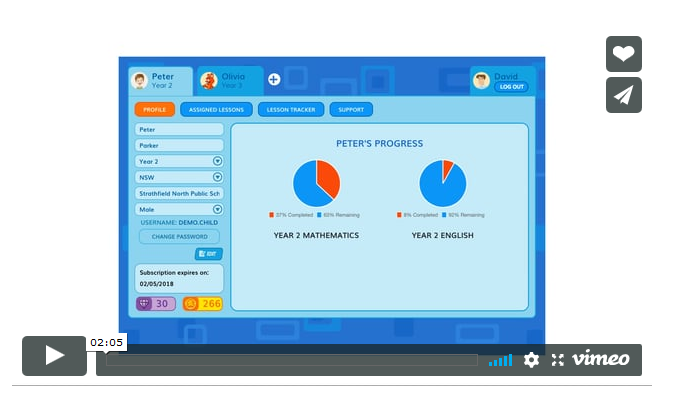
Develop their cognitive and speech & language skills with a variety of fun games on the Learn Primary app. Let them choose from hundreds of engaging lessons that complement the Australian Curriculum whilst also nurturing their increasing curiosity.

21 June, 2018

What skills do children develop between ages 7 and 9?

It’s easy to know what your children are learning at school. Anyone can look up the curriculum, google NAPLAN or ask the teacher. But aside from classroom learning, what skills are children ages 7-9 developing and how can parents help?

Read more

4 April, 2018

Using Learn Primary Effectively by Assigning Lessons to Your Child

Read more

4 April, 2018

The Perfect Primary School Learning System for your Child

?

Read more

Are school holidays the place for homework? On one hand, this time offers a great opportunity to help kids catch up on important concepts from the school term. On the other hand, kids are kids – and they love their freedom! Aussie teachers typically won’t assign any homework for primary school children over the break, but if you do want to top up your child’s skills then we would suggest making the process fun.

Planning productive school holiday activities

The best way to time to supplement kids’ normal learning routines is with activities that won’t feel like chores. Take advantage of your local museum or art gallery workshops – these are usually free to take part in and will often have some educational value included. Take the kids to the library each week and let them work their way through a pile of their favourite books. Bury some treasure in the backyard and ask them to find it using a map, which will boost their spatial abilities. Bake a cake together and ask your little one to apply their understanding of fractions to measure out the ingredients. Activities like these will apply children’s new-found understanding to practical real-world situations.

Not every learning experience is a planned one

Of course, there are simple ways to encourage your children to keep up with their important literacy and numeracy skills in everyday situations. You can ask your child to help count your change at the shop to develop their skills in counting and recognition of money, and encourage them to strike up a conversation with your friendly neighbour to develop their interpersonal language. Ask them to write a journal entry at the end of each day and share their favourite aspects with the family at the dinner table. Some subtle requests like these can help kids to naturally develop their language, literacy and mathematical skills.

Improving the quality of screen time over the school holidays

We’re guessing most parents of primary school kids will hear about the latest mobile games that everyone is playing, but there’s an educational alternative to the usual repetitive brain-draining games. A learning support system like Learn Primary that’s aligned with the Australian curriculum will provide the essential English and maths concepts in a fun and self-paced way that kids actually enjoy using. It’s a fun and engaging way to learn – much to the joy of parents everywhere! Kids are going to gravitate to their favourite activities, and if you can find ways to add learning into these then you’ll be keeping everyone happy over the school holidays.

22 March, 2018

Do Primary School Kids Need Homework during the Holidays?

Are school holidays the place for homework? On one hand, this time offers a great opportunity to help kids catch up on important concepts from the school term. On the other hand, kids are kids – and they love their freedom! Aussie teacher

Read more